← Back to Training Program

Inside the Method

Three rounds, two snake sizes, precise e-collar timing, and positive reinforcement — here's exactly how the avoidance response gets built and locked in.

Our Philosophy

Balanced Training.

Every dog gets rewarded for the right choice, and corrected — fairly, and at the lowest level that actually works — for the wrong one. Not one or the other. Both, together, calibrated to your dog specifically.

Reward alone can't compete with instinct once prey drive kicks in. Correction alone can suppress a behavior without ever teaching the dog what to do instead. Balanced training uses each for what it's actually good at — so the avoidance response is both strong enough to hold up in the real world, and taught, not just beaten in.

R+ Positive Reinforcement P+ Fair Correction Calibrated to Your Dog
The two ways it goes wrong instead

Positive-Only Training

The treat fairy isn't going to save your dog from a rattlesnake bite. Completely ineffective once high prey drive kicks in — no cookie competes with instinct.

Old-School Compulsion

It's not the 1980's anymore. Hard leash yanks and maximum-power shocks on heavy-duty e-collars, with no treats or reward at all — punishing a dog into obedience isn't training, it's just harsh, and it's not a cost we're willing to make your dog pay.

Why It's Built This Way

The 4 goals of snake training for dogs.

01
Aversion · P+
Eliminate the Curiosity

Dogs investigate anything new with their nose first — that's normal, and it's exactly what puts a dog's face in strike range. The first job of training is breaking that reflexive curiosity before it can act.

02
Aversion · P+
Defeat the Prey Drive

For a lot of dogs, curiosity isn't the whole problem — real prey drive kicks in around something small, coiled, and moving. That drive needs a correction strong enough to actually interrupt it, or "trained" breaks down the first time drive wins.

03
Positive Reinforcement · R+
Train the Retreat

Stopping a behavior isn't the same as teaching a new one. Every dog is rewarded specifically for turning and retreating, so it isn't left just afraid — it has a clear, rehearsed answer: turn, retreat, come back to you.

04
Proofing & Generalization
Make It Stick

A response that only works at one station, from one angle, isn't real avoidance yet. High-quality training proofs it across terrain, distance, and repetition until it's the dog's own automatic decision — not a trick that only works in training conditions.

The Research: P+ R+ Combined → The Four Quadrants, Explained →
Inside the Method

Three Rounds. One Locked-In Response.

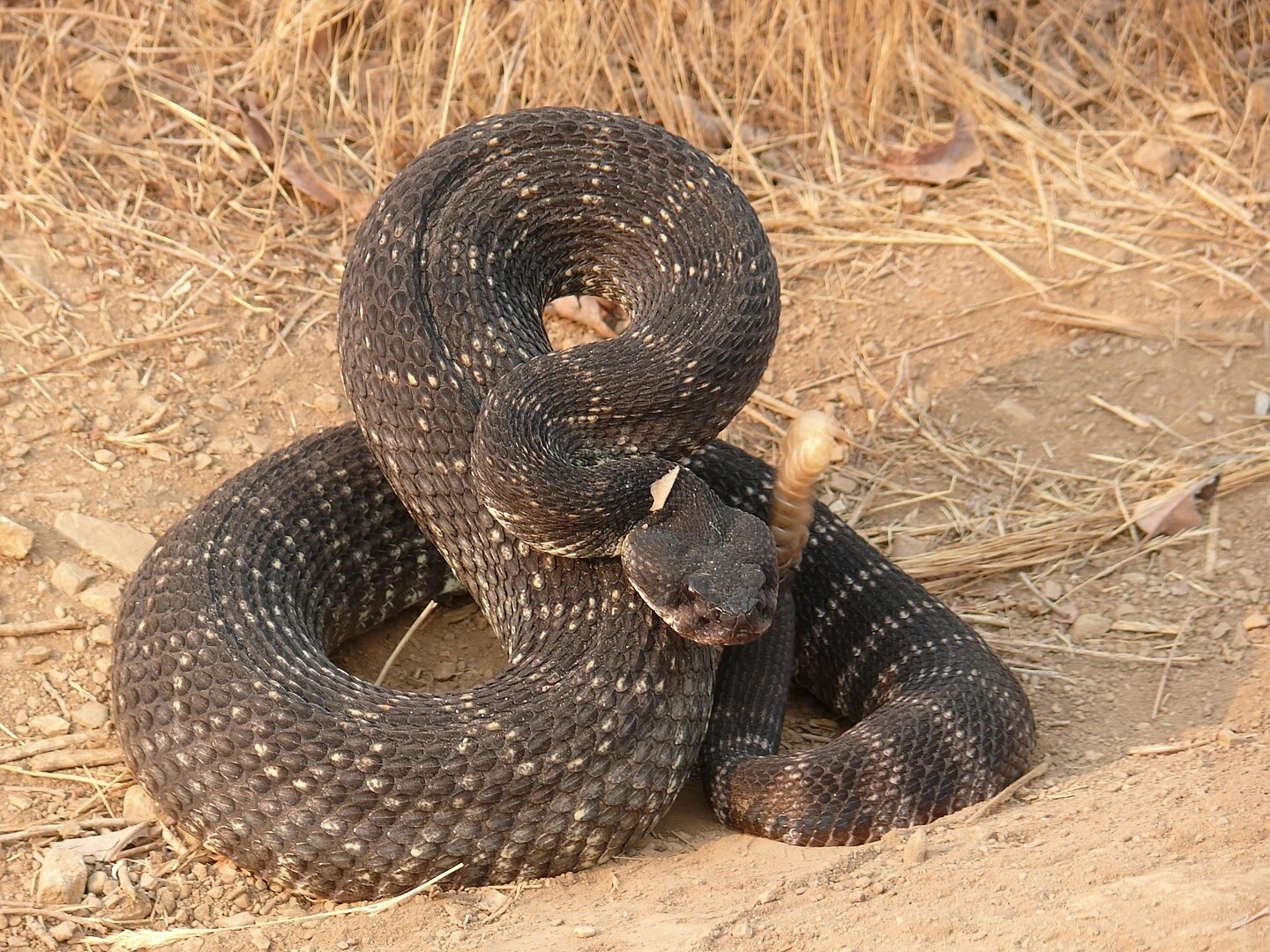
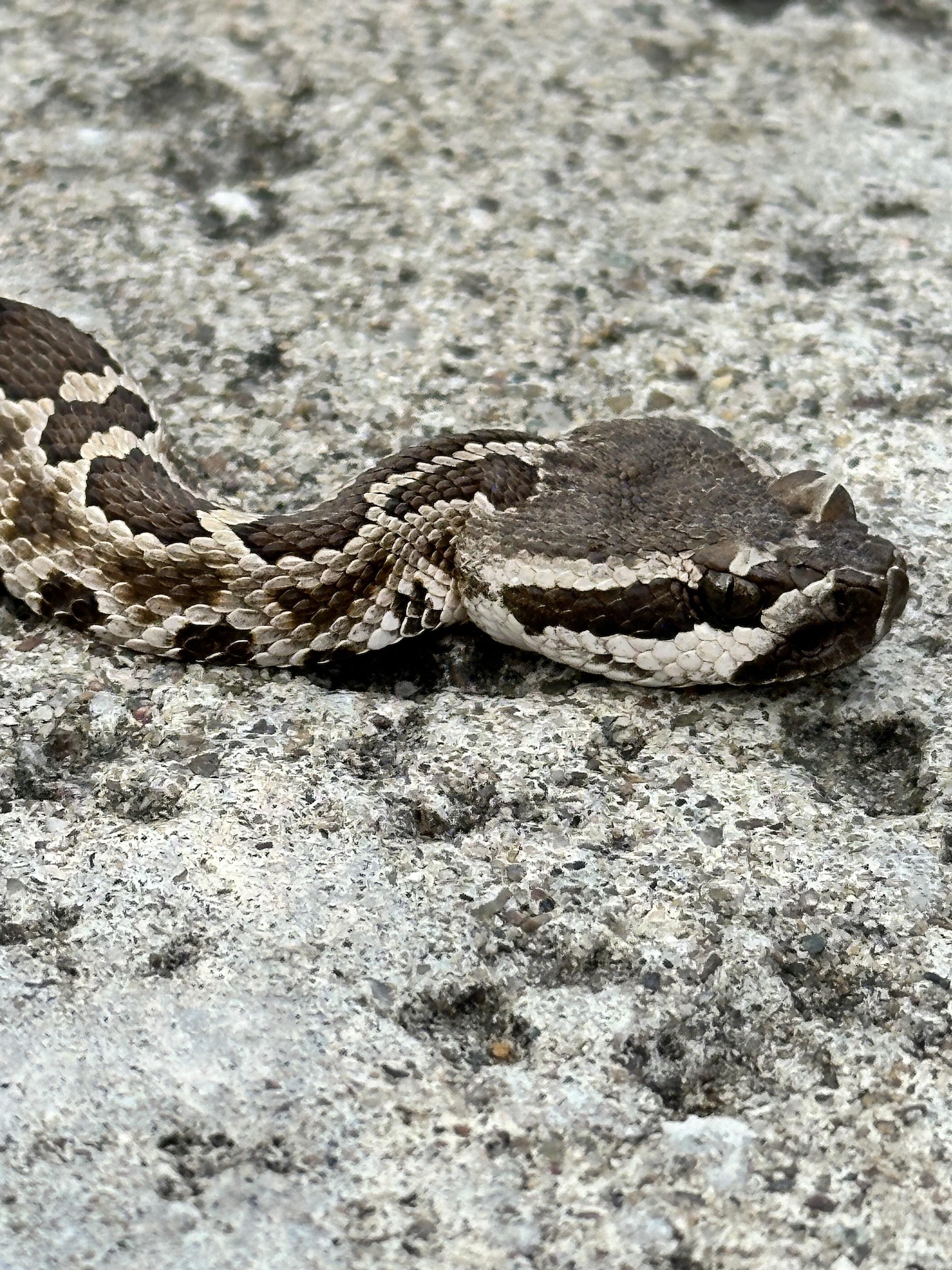
Our course has 3 mini courses built in — 4 stations each. Round 1 introduces the threat with adult snakes, round 2 runs the same 4 stations with babies, and round 3 proofs the response back on adults. Inside every round, precise timing and live exposures lock in the lesson.

Rounds 1 & 2

Adult & Baby — Your Dog Learns Both.

We run the full course once with adults, then again — start to finish — with babies. Most programs skip babies entirely. Ours doesn't.
Adult Southern Pacific Rattlesnake — the species we train against in Santa Clarita
Round 1 — Adult
Full Intensity Intro

First pass through every station — adult rattlesnakes, adult gopher snakes, full-volume adult rattle, strongest scent. The dog meets the threat at its most obvious.
Baby Southern Pacific Rattlesnake — smaller, quieter, fainter scent, equally dangerous
Round 2 — Baby
Smaller, Subtler, Still Lethal

A complete second pass through the same stations — this time with baby rattlesnakes and baby gopher snakes. Smaller, quieter, fainter scent, every bit as dangerous — and exactly the snake most often misjudged in real life.


Round 3

Final Pass. Confirmed Response.

Round 3 — Proof
Proofing & Positive Reinforcement

A final run-through, back to the adult rattlesnake. By now the avoidance is locked in — round 3 confirms the response under maximum stimulus and seals it with praise and reward. No e-collar needed.

The Training Guarantee

Pass the Final Phase — or Train Again, Free.

If your dog can't identify and avoid rattlesnakes in the final phase, you're invited back to run the course again — no charge, same handler, same snakes, same standard.

No Deductibles · No Fine Print · No Time Limit

How It Sticks

The E-Collar & Positive Reinforcement.

Stimulus
Low-Power, Calibrated E-Collar

The e-collars we use are closer to the TENS units used in physical therapy than to the shock collars most people picture — high-end units with calibrated, fine-increment settings, and we test every level on our own forearms before it touches a dog. We work at low power, never anywhere near enough to burn or injure.

Low power does not mean token, though. The level has to be high enough that your dog clearly registers the correction and ties it to the snake in front of them. A correction a dog barely notices doesn't build avoidance — it just means running the exposure again. So we find the level that works for the individual dog, and every correction at every station has to land. That is what makes the lesson hold months later on a trail, when nobody is there to remind them. We will not hurt your dog.

Reinforce
Positive Reinforcement Throughout

Once the e-collar has done its job, we immediately reinforce with praise and reward. Your dog leaves each station — and the course — with a positive association for avoidance, not just a negative for the snake.


Three Senses, Three Tools

Scent. Sound. Sight.

Scent
Scented vs. Decoy Rock Piles

Rattlesnake-scented rock piles sit beside identical-looking dummy piles. Your dog learns it's the scent that matters — not the terrain.

Sound
Sound-Triggered Corrections

Hidden speakers play adult or baby rattle sounds at the exact moment your dog reaches a station — and the e-collar fires on the same beat. The precise pairing is what makes the lesson stick.

Sight
Live Muzzled Gopher Snakes

Muzzled baby and adult gopher snakes on the course — real, moving, close-proximity exposure under fully controlled conditions.


Bringing It All Together

Real Rattlesnakes. Real Scent. Real Rattle.

Every other tool — the speakers, the scented rocks, the muzzled gopher snakes — exists to set up this one moment: your dog meeting a real, native rattlesnake inside a bite-proof containment unit in each of the three courses. Full air and sound exposure to the actual animal. The same scent, the same rattle they'll encounter in the wild. Zero risk of a bite. They'll be well ready.

Talk to Us →