Safety Standards

Rattlesnake Training Safety — Your Dog Is Never at Risk

Every training session uses live rattlesnakes handled exclusively by our certified professionals — held to the highest safety standards in the industry. Dogs are never at risk of being bitten.

Rattlesnake avoidance training — The Snake School
We Take Your Dog's Safety Seriously

We don't risk your dog's safety.

One of the only 12-station rattlesnake aversion programs in California that secures every snake in containment — a full-effectiveness program that never puts a dog in striking distance of a live rattlesnake.

0
Bites in Class. Ever.
Every rattlesnake stays inside a secure ¼-inch wire containment unit — the UC IPM rattlesnake-proof mesh standard. The dog gets the full sensory experience — no muzzles, no bites.
What Others Do
Muzzled Snakes Dangerous
Muzzles fail. Improperly applied muzzles loosen mid-session, snakes rub them off on rocks, and rattlesnake fangs are hinged — they can pivot out through gaps or pierce through the lower jaw. No muzzled rattlesnake is safe.
What Others Do
Loose Live Snakes Reckless
Some programs use unrestrained snakes with handlers nearby. One missed cue and a strike is on the dog before anyone can react.
A Critical Difference

What You're Actually Comparing.

It's not the same training with a different price tag. It's a fundamentally different operation.
Rattlesnake avoidance training — The Snake School
Other Trainers
Muzzled-Snake Programs
  • Handlers get bitten constantly while applying muzzles.
  • Poor muzzling jobs the trainer never re-checks during class.
  • No real-world rattlesnake experience.
  • Obvious safety red flags ignored or downplayed.
  • False sense of security given to paying customers.
  • Handlers put at extreme risk of bite and told everything's safe.
  • Dogs put at extreme risk while owners are convinced it's safe.
The Snake School
Containment-Based Training
  • Zero bites in our program. Ever.
  • Every snake stays inside a sealed, bite-proof enclosure — start to finish.
  • Years of professional rattlesnake handling experience — Santa Clarita Valley's most trusted and frequently called rattlesnake catchers, with 100s of removals annually.
  • Every safety standard documented, audited, and enforced.
  • Honest education — we tell customers the truth about real risks.
  • Engineered containment, no improvisation, no "trust me" moments.
  • Secure rattlesnake containment from start to finish — 0 bites in class. Owners don't have to take our word for it.
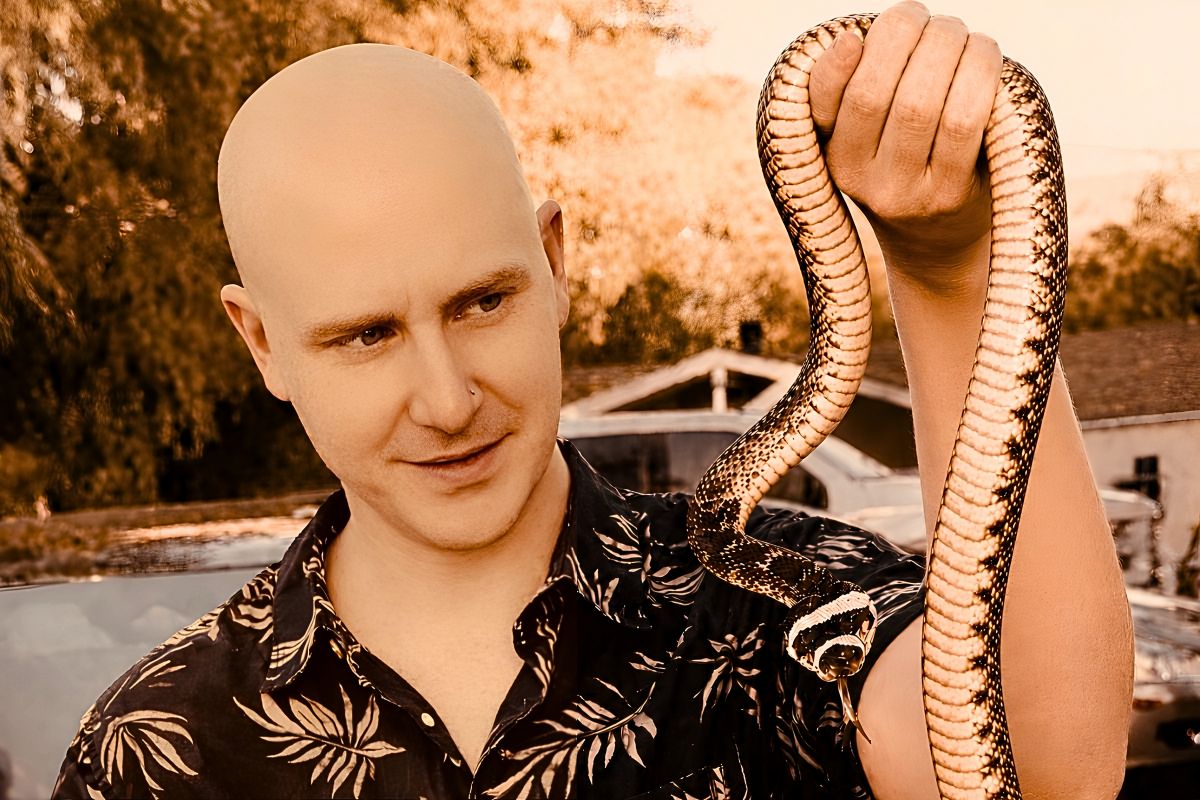
Scott with a muzzled rattlesnake at another training program

Photo taken during training for another program

We will never use muzzled venomous rattlesnakes at The Snake School.

Documented Failure: Muzzled Venomous Snakes

See Just How Long Rattlesnake Fangs Really Are.

A close-up look at the size of a rattlesnake's fangs — and why, when a muzzle isn't applied perfectly by an expert, those fangs can pivot out and pierce right through the bottom of the snake's own mouth.

Gopher Snakes on the Course. We also use live gopher snakes — a completely harmless species — so dogs can observe natural snake movement in the open. This reinforces visual recognition of snake travel behavior in a safe, zero-risk setting.
Why no muzzled snakes? Muzzled rattlesnakes become docile — their behavior changes in ways that undermine the training. A dog needs to encounter the real stimulus: the sight, sound, and scent of a naturally-behaving rattlesnake. Our containment units make that possible without putting anyone at risk.

The rattlesnakes are carefully managed at every moment so your pet learns avoidance in a controlled, safe environment. Our containment method is non-negotiable — not a preference, a standard.

Equipment & Safety Standards
The Gold Standard in K9 Safety:
Secure Wire-Mesh Containment

Our containment units use rigid ¼-inch galvanized wire mesh on sealed, rigid frames — the UC IPM rattlesnake-proof barrier standard. Most trainers use tape, burlap, or muzzles. The difference isn't cosmetic — it directly determines how well your dog sees the snake, how accurately they learn its scent, and how safe the encounter is. Your dog never makes direct contact with the cage.

Full Visual Exposure

Fine ¼-inch wire mesh keeps the snake in clear, open view — your dog sees every coil, rattle, and strike posture, building the reliable visual search image they need to recognize a rattlesnake instantly in the field.

Open Scent Airflow

Open wire mesh lets the snake's scent move freely and naturally to your dog — no drilled holes, no restriction. Scent is a dog's primary alert system. A dog trained on it can detect a rattlesnake at 30 feet or more, before visual contact is possible.

Bite-Proof Barrier

Muzzles slip. Burlap tears. Rigid ¼-inch galvanized wire mesh doesn't. The snake is fully contained and your dog never makes direct contact with the cage — there is no scenario in which a dog touches the snake during training, which removes "fight" from fight-or-flight entirely and lets the dog learn the only response that matters: immediate aversion.

"By following professional-grade barrier guidelines, we ensure that 'simulated danger' never becomes 'real danger.' The containment system is not a supporting feature of the training — it is a prerequisite for the training to work as intended."

— Partners Dog Training, Professional Standards in Rattlesnake Safety

Containment Units
How We Keep Every Dog Safe
¼-Inch Wire Mesh

Containment units use rigid ¼-inch galvanized wire mesh on sealed, rigid frames — the UC IPM rattlesnake-proof barrier standard. The mesh is far too fine for a snake's fang to reach through, and your dog never makes direct contact with the cage.

Non-Negotiable Standard

Every rattlesnake used in our training is secured inside a containment unit at all times. Your dog never has direct access to the snake — and that is non-negotiable. Not a preference. A standard.

Ready to Protect Your Dog

One Session. Lasting Protection.

Classes fill fast. Reserve your spot today and give your dog the protection they need for every trail, backyard, and open space.

Reserve a Spot →